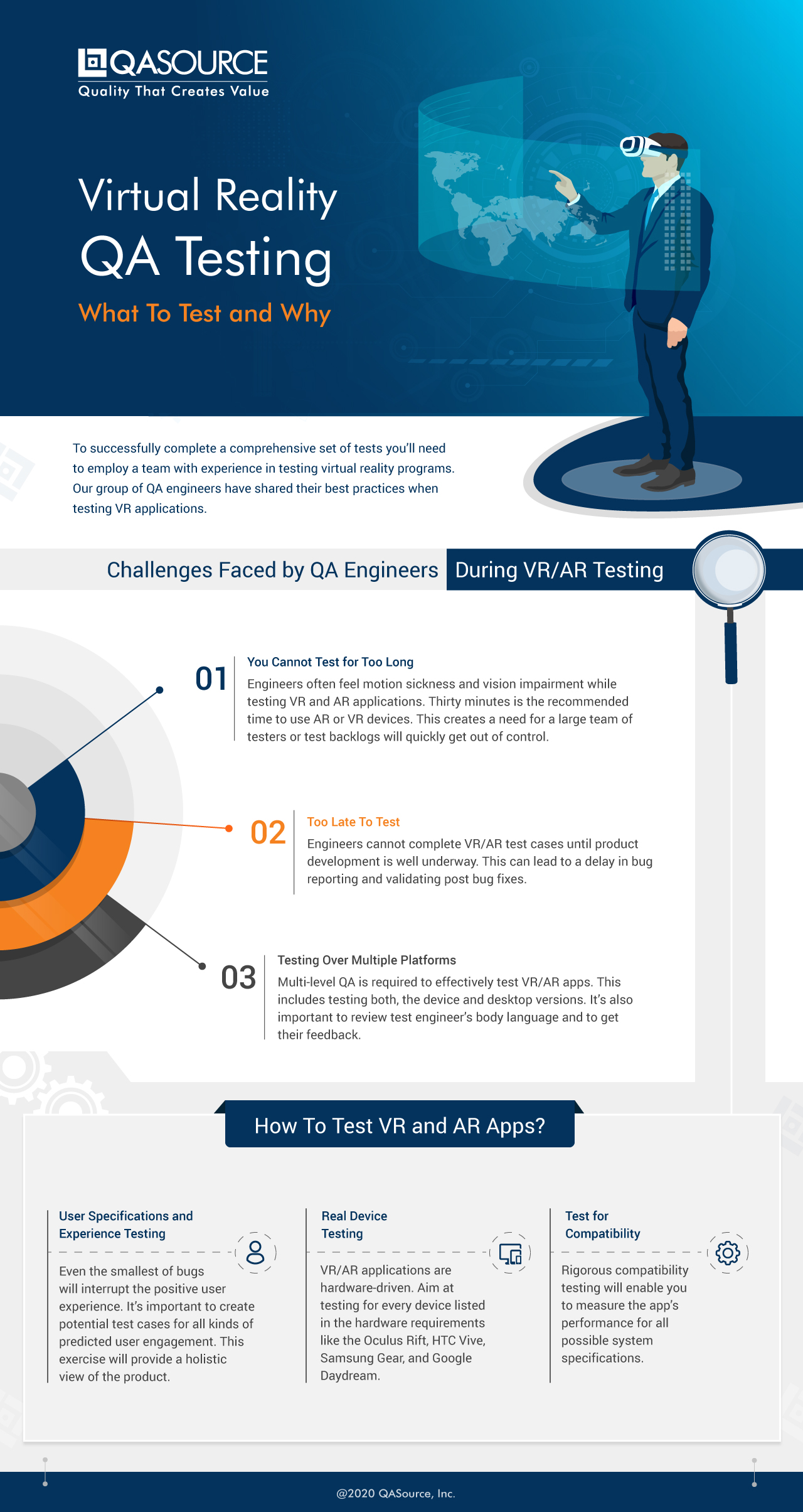
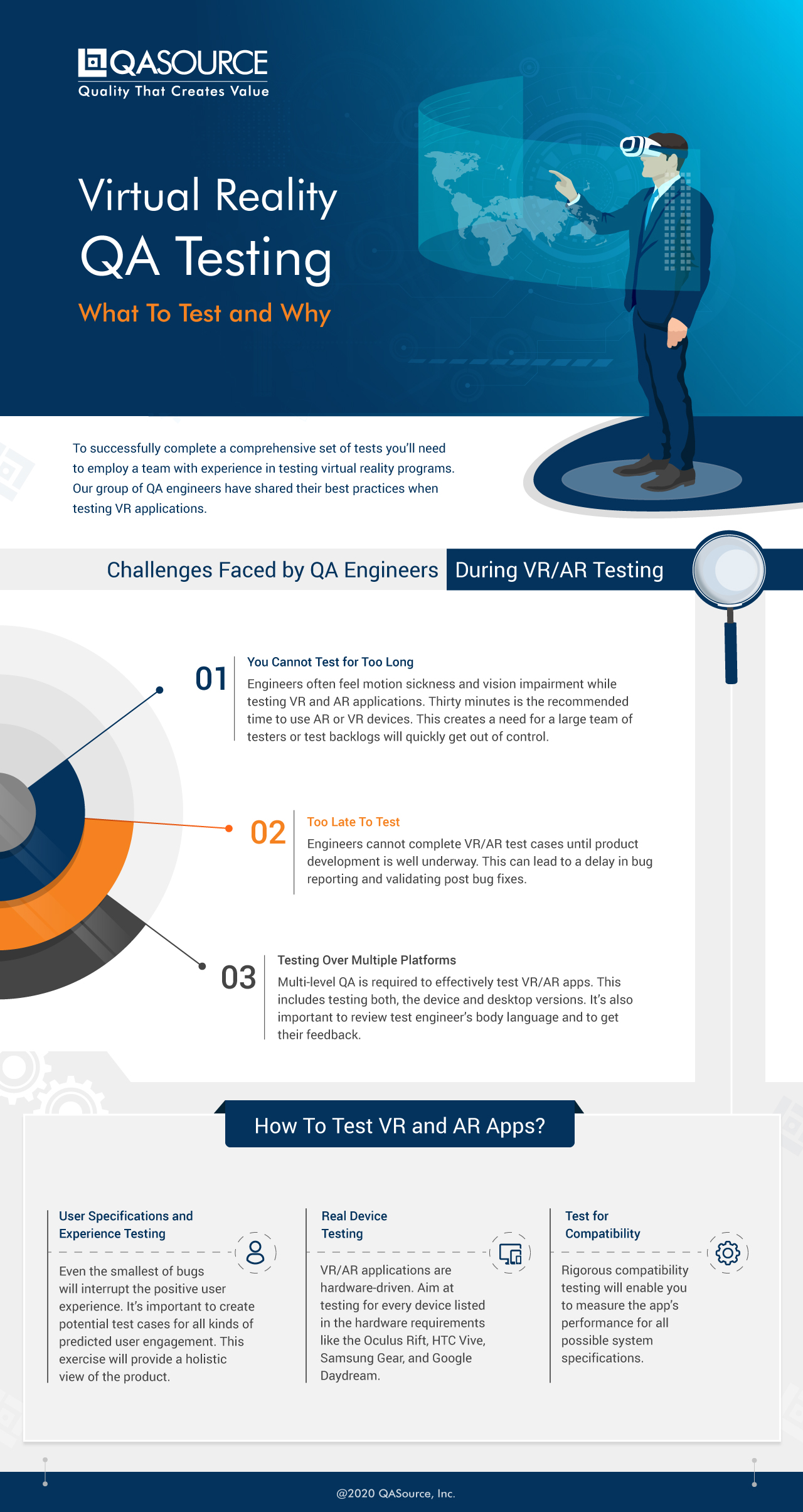
QASource's testing engineers share their tried and tested approach for testing augmented reality and virtual reality applications. This infographic will walk you through the test strategies ideal for VR/AR testing.
This publication is for informational purposes only, and nothing contained in it should be considered legal advice. We expressly disclaim any warranty or responsibility for damages arising out of this information and encourage you to consult with legal counsel regarding your specific needs. We do not undertake any duty to update previously posted materials.
Forrester estimates that the RPA market will reach $2.9 billion this year, which shows that the software industry continues to grow at an extraordinary rate. In this infographic, our QA engineers have shared a quick guide to robotic process automation and its tools.
Virtual reality (VR) and augmented reality (AR) have been the stuff of fantasy for a long time. Remember the bulky headsets and long, snaking connector cords of the 1980s? But it’s becoming increasingly popular and approachable in today’s market - just consider the rampant success of Pokémon GO, the mobile AR game. Companies are starting to explore how VR/AR can help create a more attractive, immersive product for their customers.
Let's pinpoint how tailored QA outsourcing can elevate your development cycle and reduce your market time.
Our bloggers are the test management experts at QASource. They are executives, QA managers, team leads, and testing practitioners. Their combined experience exceeds 100 years, and they know how to optimize QA efforts in a variety of industries, domains, tools, and technologies.