


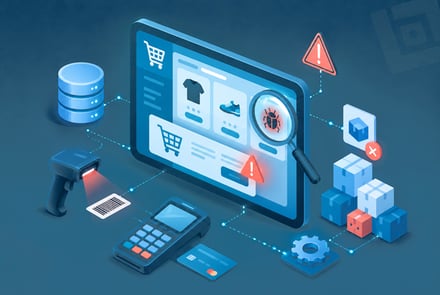
This blog explores the importance of software testing in retail, key retail app testing types, common PoS challenges, and how AI-driven test automation improves speed, coverage, stability, and customer experience across complex retail ecosystems.

 July 29, 2026
 March 13, 2024
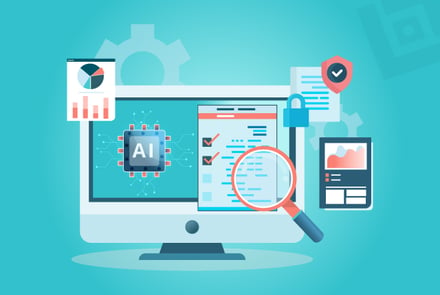
Recent studies indicate a reduction in test case generation time by up to 50% while expanding test coverage and accuracy. Additionally, organizations report up to a 25% decrease in overall testing costs due to optimizing resources and reducing manual efforts.
 August 4, 2020
If you want a bug-free product, your QA team must carry out both functional and non-functional testing. QA teams tend to be more familiar with executing non-functional tests to ensures the usability and performance of the product, leading to less time and attention on functional testing where many of the defects often hide. Functional testing doesn’t have to be intimidating. With the understanding of the value that functional testing can bring to your development cycle, your team can then plan how to incorporate functional testing services within your QA testing procedures.
 November 12, 2019
The customer experience begins when a product works. Functional testing is the way to ensure that happens. Since testing affects the overall SDLC, developers must implement functional testing as quickly and efficiently as possible. That means automation. Specifically, automated functional testing tools. So which tools should you use, and how?
 January 2, 2019
Unit testing is important but when aiming at the quality it's limited. An alternative is functional test coverage through test automation, which tracks whether tests execute important values corresponding to software features.
 November 1, 2017
In this expert series, we bring you the concepts that help to understand API testing and its tools/techniques used to perform so that you can employ the right kind of approach as per your testing requirements.
 September 16, 2015
Whether you're pursuing onsite or offshore QA, functional testing is an essential component of any test suite. It shows how effectively an application or system performs as a whole. Functional testing ensures that the customer's requirements will be met upon delivery, so the inputs are typically the specific business requirements.